Elastic cord
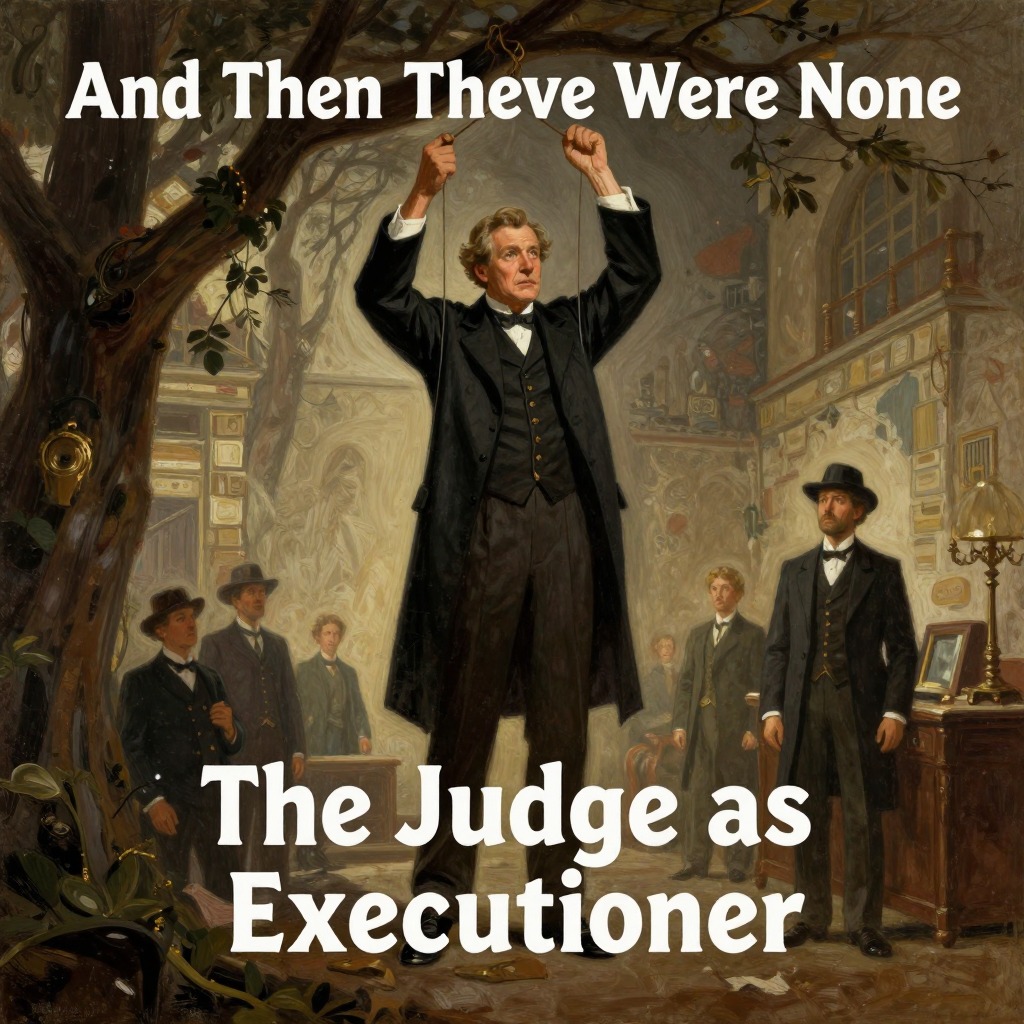
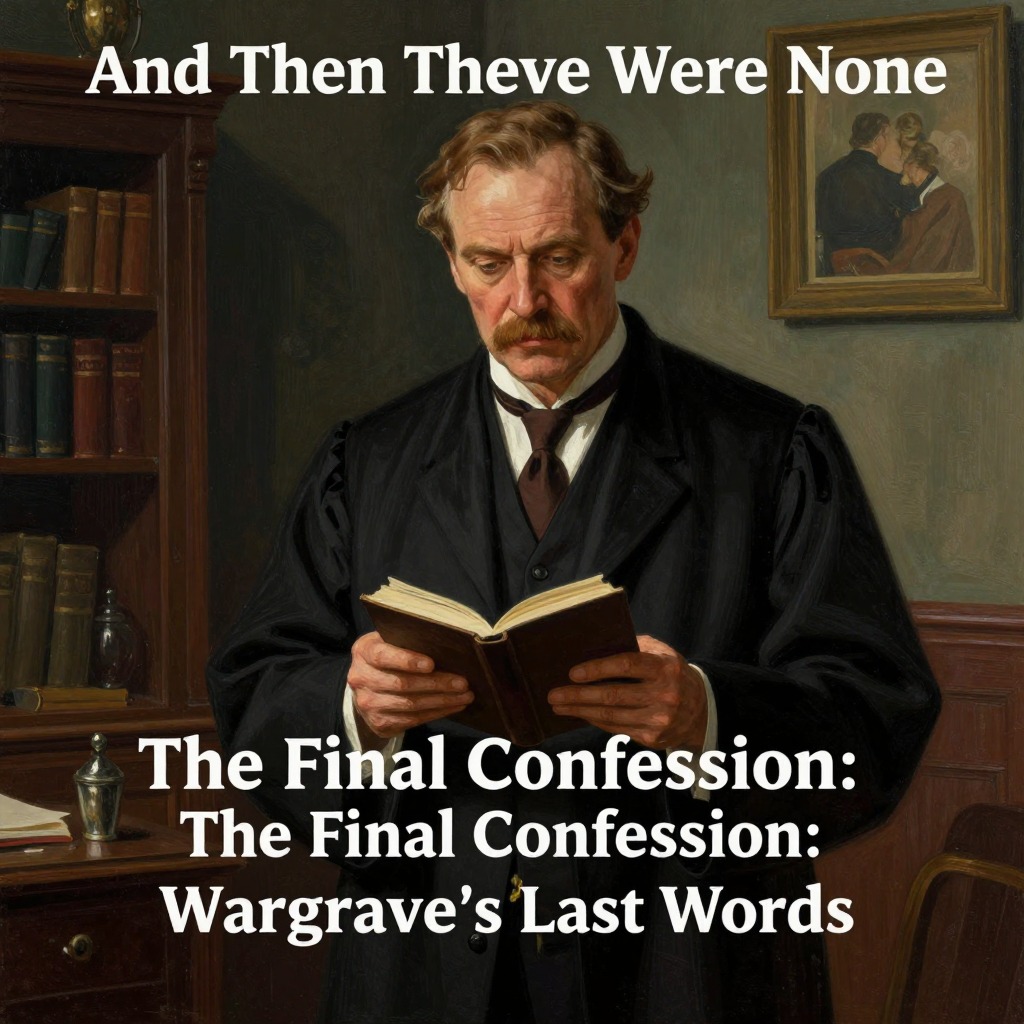
The elastic cord appears only in the final moments of the Indian Island mystery, yet it is the linchpin of Lawrence John Wargrave's elaborate plan to make his own death appear as the work of an unknown killer. In his manuscript confession, cast into the sea in a bottle, Wargrave describes how he attached a length of what seemed to be fine black cord to his eyeglasses. This cord was actually elastic, and he looped it around the door handle of his room, connecting it to the revolver that Vera Claythorne had dropped at the top of the stairs. The cord's elastic property was essential: after Wargrave, his hand protected by a handkerchief, pressed the trigger and shot himself through the forehead, the recoil would pull the revolver back toward the door. Jarred by the door handle, the revolver would detach from the elastic and fall to the floor, while the elastic, released, would hang down innocently from the eyeglasses on which his body lay. A handkerchief lying on the floor would cause no comment. This ingenious arrangement ensured that when the bodies were discovered, Wargrave would be found laid neatly on his bed, shot through the forehead, with no visible connection to the weapon—a final piece of misdirection that would leave the police with an unsolved problem on Indian Island.
Design and Concealment
The elastic cord was not an object that drew attention during the days of terror on the island. It was, in Wargrave's own description, a length of what seemed to be fine black cord, indistinguishable from the cord that might ordinarily attach to a pair of eyeglasses. This very ordinariness was its camouflage. Wargrave, a retired judge who had presided over countless trials, understood the value of the unremarkable. The cord was part of his personal effects, carried to Indian Island as part of his luggage, and it escaped the rigorous search that the survivors conducted after the deaths began. When the group, now reduced to five, submitted to a search of their persons and effects, Wargrave's eyeglasses and their attached cord would have seemed innocuous. The elastic nature of the cord was its hidden secret, a detail that only Wargrave himself knew.
Mechanism and Execution
Wargrave's plan for his own death was a masterpiece of stagecraft, and the elastic cord was its central prop. After Vera Claythorne had shot Philip Lombard and then hanged herself in her bedroom, Wargrave emerged from the shadow of the wardrobe where he had been watching. He retrieved the revolver from the top of the stairs, careful to preserve Vera's fingerprints on it. Then he went to his own room. He laid himself on the bed, placed the revolver in his hand, and attached the elastic cord from his eyeglasses to the door handle. The cord was looped around the handle, not too solidly, so that the revolver would detach when jarred. When he pressed the trigger, the elastic recoil pulled the revolver across the room, where it struck the door handle and fell to the floor. The elastic, now released, hung down from the eyeglasses, appearing to be nothing more than an ordinary cord. The handkerchief that had protected his hand from powder burns lay on the floor, seemingly unrelated to the death. The scene was set for the police to find a body that appeared to be another victim of the unknown killer.
Narrative Significance
The elastic cord is a symbol of Wargrave's meticulous planning and his desire for artistic perfection. It is the final piece of a puzzle that he intended to remain unsolved, a device that allowed him to control the narrative even after his own death. The cord's elastic property—its ability to stretch and recoil—mirrors the way Wargrave manipulated the perceptions of his victims and, ultimately, of the police. It is a small, almost invisible object that carries the weight of the entire mystery. In his confession, Wargrave acknowledges that he left three clues for the police, but the elastic cord is not among them. It is his secret, the mechanism that made his vanishing trick possible. The cord, like the judge himself, is a thing of contradictions: it is both a practical tool and a symbol of his hubris, a piece of string that holds together the final act of a grand, theatrical crime.